
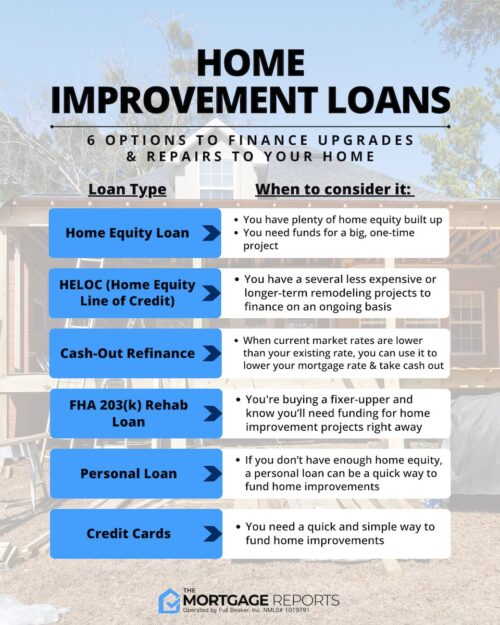
Home improvement loans are unsecured personal loans designed to cover the costs of renovations, repairs, or aesthetic upgrades to your property. Unlike home equity products, these loans do not require you to put your house up as collateral, which protects your property from foreclosure if you run into repayment struggles.
If you are staring at a kitchen that looks like it belongs in a 1970s sitcom or a bathroom that has seen better decades, you probably realize that cash doesn’t just grow on trees. You need a strategy to fund the dream without losing your mind or your equity. We have spent a lot of time looking at how people actually pay for these projects, and it usually boils down to three main paths: personal loans, credit cards, or tapping into the equity you have built up in your home.
The choice depends entirely on how much you need and how much risk you are willing to take. For a simple backsplash update, a credit card might do the trick. For a full-scale kitchen overhaul involving new cabinets, countertops, and appliances, you might need something more substantial. This is where the distinction between secured and unsecured debt becomes the most important part of your decision-making process.
When you opt for an unsecured loan, you are essentially telling the lender, “I promise to pay this back, and if I don’t, you can come after my bank account, but you can’t take my roof.” This peace of mind is why many homeowners prefer personal loans over more aggressive financing options. It keeps your living situation slightly more insulated from your financial hiccups.
Why Unsecured Loans Beat Home Equity for Small Projects
Many people assume that because they own a home, they should always use a Home Equity Line of Credit (HELOC) or a home equity loan to pay for renovations. While those options can offer lower interest rates, they come with a massive catch. Because a HELOC is tied to your house, your home acts as collateral for the loan. If you hit a rough patch and can’t make the payments, the bank can eventually foreclose on your house. That is a high price to pay for a new deck.
Unsecured personal loans are a different beast entirely. As noted by finder.com, a home improvement loan is typically an unsecured personal loan used to fund repairs, renovations, or upgrades to your home. Because it’s unsecured, you don’t put your house up as collateral, unlike a home equity loan or a HELOC. This distinction is vital if you are planning a medium-sized project and want to keep your mortgage and your renovation debt completely separate.
There is a certain elegance to the simplicity of a personal loan. You apply, you get approved, you receive a lump sum, and you pay it back in fixed monthly installments. There are no appraisals required, no complicated paperwork regarding your property’s value, and no need to wait weeks for a bank to verify your home’s market price. It is fast, it is direct, and it gets you moving on that remodel much sooner.
However, that speed and lack of collateral often come with a trade-off. You might find that the interest rates on an unsecured loan are higher than what you would get with a secured loan. You have to weigh that extra cost against the security of knowing your home isn’t on the line. Is the peace of mind worth an extra 2% or 3% in interest? For many, the answer is a resounding yes.
When you are looking at your options, you should consider the following:
- Speed of funding: Personal loans can often be funded within a few business days.
- Fixed terms: Most personal loans have a set end date, so you know exactly when you’ll be debt-free.
- Loan amounts: You can often borrow anywhere from $2,000 to $50,000 or more depending on your credit.
- Impact on credit: Taking out a new loan will trigger a hard inquiry, which might temporarily dip your score.
If you are looking for specialized financing or looking to understand your local options, checking out texasloanstoday.com might provide some useful local context for your search. Having a clear view of what is available in your specific region can prevent a lot of wasted time during the application process.
Comparing the Different Ways to Fund Your Remodel
Deciding how to pay for your renovation is a math problem, but it is also a risk management problem. If you use a credit card, you are dealing with revolving debt. If you don’t pay it off by the end of the month, those interest rates can skyrocket, sometimes reaching 20% or 25% easily. It is a terrible way to fund a long-term project like a basement remodel, but it is fine for a weekend DIY trip to the hardware store.
Then you have the structured options. According to The Wall Street Journal, you should cover home improvement projects with personal loans, credit cards, or home equity financing, but you must compare rates and terms to get the best deal. This is the golden rule of home improvement. Don’t just take the first offer from your primary bank just because they already have your mortgage. They might give you a great rate on your house but a terrible rate on a personal loan.
We see people make the mistake of over-borrowing all the time. They see a shiny new kitchen in a catalog and assume they need $60,000 to make it happen, but they forget to account for the “oops” factor, the plumbing that turns out to be rotten or the electrical work that needs an upgrade to meet modern code. When you borrow money, you are borrowing for the reality of your house, not the fantasy of the magazine.
Let’s look at how these options actually stack up against each other in a practical sense:
| Financing Type | Collateral Required? | Interest Rates | Best For |
| Credit Card | No | High | Small, quick fixes |
| Personal Loan | No | Moderate | Medium to large renovations |
| HELOC | Yes (Home) | Lower | Large, multi-phase projects |
| Home Equity Loan | Yes (Home) | Low/Fixed | Major, predictable renovations |
If you are planning a project that will significantly increase your home’s value, like adding a bathroom or finishing a basement, the math usually tilts toward equity-based loans. But if the project is about maintenance, like a new roof or replacing an aging HVAC system, the personal loan is usually the smarter, safer play.
Can you really afford to lose your home if this renovation doesn’t go as planned? That is the question that keeps many people up at night when they consider using their house as a piggy bank.
The Hidden Costs of “Cheap” Financing
It is very easy to get caught up in the monthly payment amount. A lender tells you that you can get a loan for $250 a month, and that sounds perfectly manageable given your current salary and existing bills. But that monthly number is just a piece of the puzzle. You have to look at the total cost of the loan over its entire lifespan. A low monthly payment on a 7-year loan might actually cost you thousands of dollars more in total interest than a higher monthly payment on a 3-year loan.
Then there are the fees. Some lenders charge origination fees that are taken right off the top of your loan amount. If you apply for $20,000 but they charge a 5% origination fee, you only see $19,000 hit your bank account, but you are still paying interest on the full $20,000. You need to read the fine print on those terms before you sign anything. It is the little things that eat your renovation budget alive.
Another thing to watch out for is the “prepayment penalty.” Some lenders want to make sure they get their interest, so they charge you a fee if you try to pay the loan off early. This might not matter if you plan to pay it off slowly, but if you expect a bonus or a tax refund and want to wipe out that debt, a prepayment penalty can be a nasty surprise. It feels like you are being punished for being responsible with your money, which is a frustrating feeling.
You should also keep a close eye on how your lender handles variable rates. Some personal loans offer fixed rates, which is what most people want because it means your payment never changes. Others might offer a lower starting rate that is variable, meaning if the economy shifts and interest rates go up, your monthly payment goes up too. You do not want to be halfway through a kitchen remodel when your debt suddenly becomes 3% more expensive.
Keep these items in your mental checklist when you start shopping:
- Check for origination fees that reduce your actual take-home cash.
- Confirm whether the interest rate is fixed or variable.
- Ask explicitly about prepayment penalties.
- Look at the total cost of interest over the life of the loan, not just the monthly payment.
How to Prepare for the Application Process
Applying for a loan is not just about clicking a button and hoping for the best. If you want the best rates, you need to have your house in order, and I mean your financial house, not the one you are renovating. Lenders are looking at your debt-to-income ratio, your credit score, and your employment stability. If you have just opened three new credit cards last month, you are going to have a hard time getting a great rate on a home improvement loan.
I always suggest that people wait a few months to clean up their credit before they hit the “apply” button. This might mean paying down a high-interest credit card or ensuring that all your other payments have been on time for the last six months. A better credit score doesn’t just make you look better to the lender; it actually saves you real, tangible money in the long run. It is worth the wait.
When you do sit down to apply, gather your documents ahead of time. You will likely need recent pay stubs, W-2 forms, tax returns, and a clear picture of your monthly expenses. The more organized you are, the smoother the process tends to go. Some lenders might ask for proof of what the loan is for, though many personal loans are “use of funds” flexible, meaning you can use the money for whatever you want.
One final piece of advice: shop around. Do not just walk into your local branch and settle for what they offer. Use comparison tools to see what online lenders are doing. Different banks have different appetites for risk. One might be very picky about your credit score but offer a great rate, while another might be more lenient but charge higher fees. Finding the middle ground is where the real value is found.
Do not let the paperwork intimidate you. Once you understand the mechanics, it is just a series of checkboxes and signatures. There’s a useful breakdown over at texasloanstoday.com.